What Happened When Researchers Co-Founded a Startup with AI
This Harvard Business Review article examines a bold experiment in which researchers treated AI as a startup co-founder, exploring its role in decision-making, operations, and creativity. Contact CIO Main Street to discuss how AI partnerships could shape your future of work strategies.
Why make AI the “first hire” in a startup?
Founders are starting to treat AI as their first hire because it lets them move from idea to execution much faster and with leaner teams. In the Microsoft–NYU Stern collaboration, student teams used Microsoft 365 Copilot as a core team member from day one. The AI took on work that would normally require several early hires: analyzing information, drafting designs, and supporting strategic decisions.
By embedding AI at the start, teams could:
- Test and refine ideas quickly.
- Produce tangible outputs (documents, designs, analyses) without waiting to staff up.
- See more clearly which roles still required human expertise.
Instead of being a later add-on, AI became a foundational part of how work got done, helping teams rethink what “early hiring” really needs to look like.
What roles can AI realistically play in an early-stage startup?
In the NYU Stern Tech MBA project with Microsoft, AI was positioned as a core team member from day one and took on several concrete roles:
- Analyst: synthesizing information, exploring ambiguous questions, and helping teams understand markets or problems more clearly.
- Designer: generating drafts of product concepts, content, and workflows that humans could then refine.
- Strategic partner or “co-founder”: supporting planning, outlining business models, and stress-testing assumptions.
Because the AI could handle open-ended, ambiguous tasks and still produce usable outputs, it helped teams clarify what they actually needed from human colleagues. That, in turn, reshaped hiring decisions around the gaps that remained after AI had done its part.
How does AI change startup hiring and scaling decisions?
When AI is built into the startup from the beginning, it becomes an economic lever rather than just a cost line. In the Microsoft–NYU Stern experiment, teams used AI to break traditional workflows and operate more like “Frontier Firm” companies—lean, tech-enabled, and iterative.
This changes hiring and scaling in a few ways:
- Founders can delay some early hires because AI covers a portion of analysis, design, and planning work.
- Hiring becomes more targeted: leaders look at what AI already does well and then recruit for the remaining gaps, such as relationship-building, domain expertise, or complex judgment.
- Teams can iterate on ideas and processes faster, which informs when and where to invest in people.
Instead of building a large team first and then adding AI tools, startups can reimagine their growth path around a smaller core team that collaborates closely with AI from the outset.
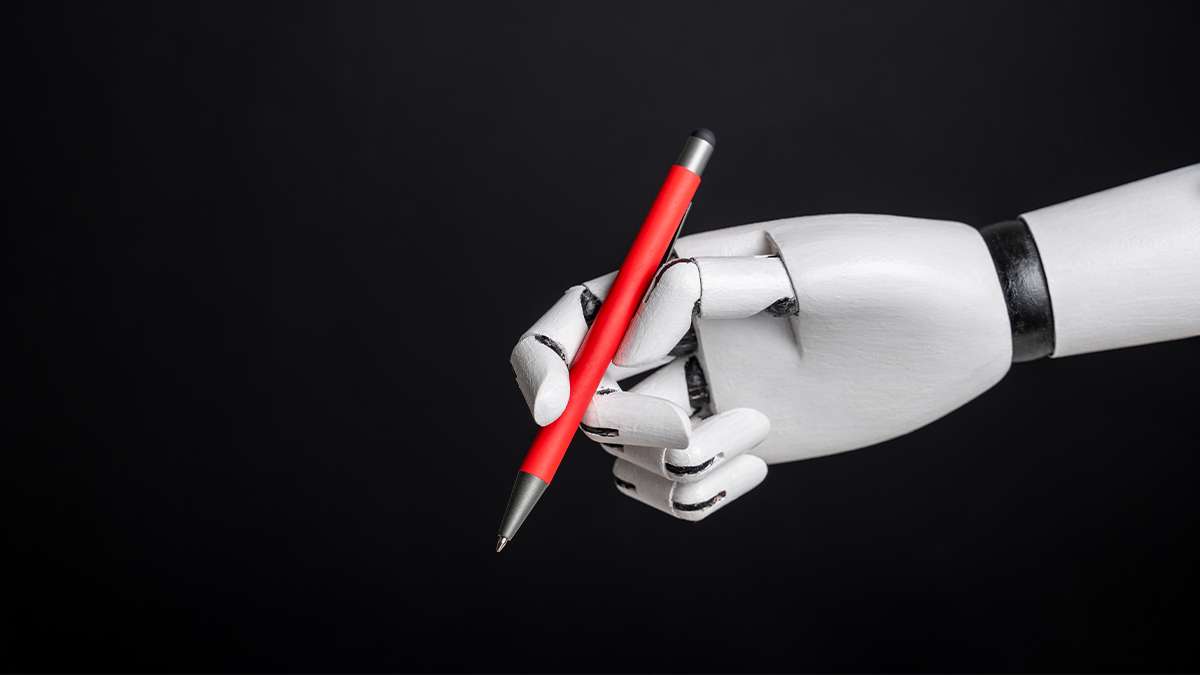
What Happened When Researchers Co-Founded a Startup with AI
published by CIO Main Street
CIO Main Street is a Computer, Network, and Information Technology Consulting company that brings Chief Information Officer services to Main Street America. At CIO Main Street, we speak Windows, we speak Mac, but best of all we speak Human!
We help organizations by asking a few questions. What do you want technology to do for you today? And what can you imagine it doing for you in the future? Notice that we do not say bits and bytes. Or hardware/software?
We offer qualified and professional service to our customers by helping them save time, reduce stress, and avoid frustration and we do this by LISTENING. It is said that “with two ears and one mouth use them proportionally you will do just fine” and that is what we do, we LISTEN to you and your people.
We help Design, Install, and Maintain the IT Network solutions that to run your business or non-profit by Keeping I.T. Simple.
.png "CIO Main Street")




 Sign in with LinkedIn